We push a little harder. Expect a little more of ourselves. Try to get things just right. And beneath all that striving, there can be a quieter belief:
- If I do enough, perhaps I will finally feel like I am enough.
- If I show that I care, perhaps others will show me they care about me.
- If I love with all I have, perhaps I will feel loved in return.
When we begin to uncover what drives our strong, capable, tireless “I can handle anything” or “do whatever it takes” self, we may discover that the drive is not simply ambition. Sometimes it is an attempt to compensate for a sense of not being enough—to prove, perhaps even to ourselves, that we are worthy, wanted, lovable, or valued.
Over time, that constant striving has consequences. It affects our bodies, our nervous systems, our beliefs, and eventually our relationships. We become depleted. Our world can become reactive, anxious, unsettled, or discouraged. Sleep doesn’t restore us. We may withdraw or escape, blame someone else, or turn the blame inward. We may push our bodies harder or overindulge in other ways to find relief.
We can feel deeply connected one moment and misunderstood the next. Then come the regret, guilt, or shame—and the question:
Why do I keep experiencing the same outcomes when I am trying so hard?
From that low place, what do we often do? We begin pushing again. We promise ourselves we will do better, work harder, be more disciplined, more patient, more loving. We will finally get it right.
And the cycle begins again.
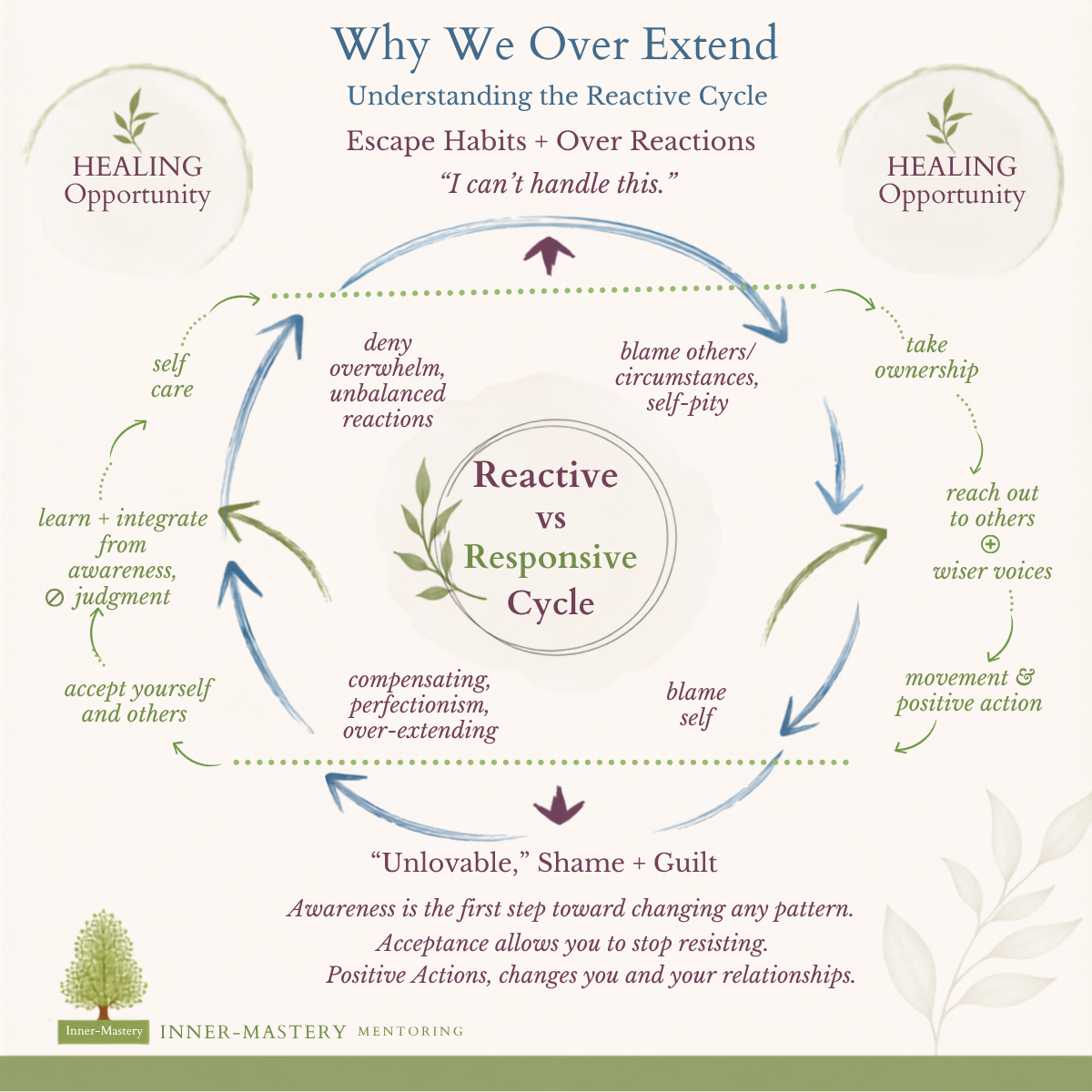
Click the image to enlarge. Click outside the image to close.
There is nothing inherently wrong with effort, ambition, discipline, or striving toward something that matters. These can be wonderful qualities. The challenge comes when healthy effort quietly becomes overextending—when doing more becomes a way of trying to feel enough, wanted, lovable, or worthy.The opportunity is to notice the shift before we reach our limits; to pause and ask yourself:
🌿Can I recognize when healthy effort is becoming overextending?
🌿Can I notice when I am blaming someone else—or when I have turned that blame against myself?
🌿Can I become curious about what I am truly yearning for beneath all the effort?
🌿Can I pause the judgment of myself, others, or this moment, and allow things to be as they are right now?
Very often, what we are yearning for is not perfection at all. It is love, connection, meaning, happiness, and a self-regard for all that we have become. And these are not things we can force into existence through greater and greater effort
This is why paying attention to our inner reactions matters. What happens within us does not necessarily have to stay with us. The way we treat ourselves influences how we relate to the people closest to us, and those patterns can move outward into our families, workplaces, communities, and the larger culture we share.
When we are depleted, our world can become smaller. We have less room to pause, less capacity to remain curious, and less ability to see beyond our immediate experience. Exhaustion can make us more reactive and judgmental. Frustration can become blame. Self-protection can become disconnection. And suddenly, the world can begin to look more divided:
me or you…right or wrong…us or them
This is where personal overextending becomes something larger than a personal problem. The ways we respond to our own internal pressures can shape how we experience and respond to other people. When we are struggling to stay connected to ourselves, it can become harder to remain open and connected to others.
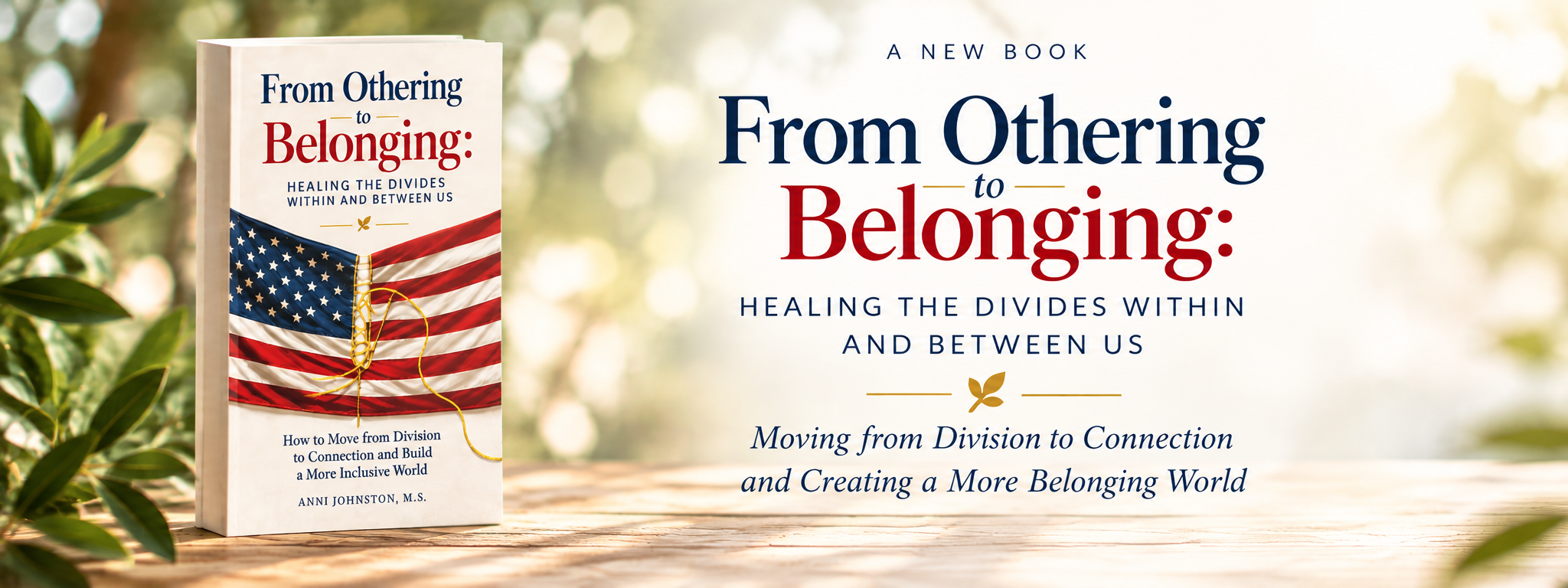
This is also where my new book, From Othering to Belonging: Healing the Divides Within and Between Us, takes the conversation a step further. Because belonging does not come by pushing beyond others, but by becoming aware of stretching beyond your limits and returning to balance. The more capacity we have to remain connected to ourselves, the more capacity we have to remain connected to one another. And the more connected we are to one another, the more we have to offer the world.
So I invite you to consider:
- Where in your life has healthy effort quietly become overextending?
- What might change if, instead of pushing harder, you became curious about what you are truly seeking?
- What might get stirred up in you if you stopped filling every gap, solving every problem, or going until you are spent?
- And with whom has your driven style of “loving” quietly become “limiting”—either to you or to them?
If these questions resonate with you, my book “From Othering to Belonging: Healing Division Within and Without,” offers a deeper exploration of this territory. How the patterns within us shape the way we experience ourselves, one another, and the world we share.
You can learn more about the book—and about being part of this movement toward greater belonging— by clicking the image below.
Looking inward is not an escape from the world.
It may be one of the ways we begin creating more belonging within it.